Inauguaral Annual EFILA Conference 2015
“EU law and investment treaty law: convergence, conflict, or conversation?”
SENATE HOUSE, LONDON, 23 JANUARY 2015
Conference booklet and bios EFILA-Annual-Conference-2015
PROGRAM
08:30-09:00 Registration tea and coffee
09:00-09:15 Introduction by Chair/Secretary-General
Welcome to conference
– Nikos Lavranos, Secretary-General of EFILA, Head of Legal Affairs at Global Investment Protection (GIP) AG, Zürich; former Senior Trade Policy Advisor responsible for all Dutch BITs at the Dutch Ministry of Foreign Affairs
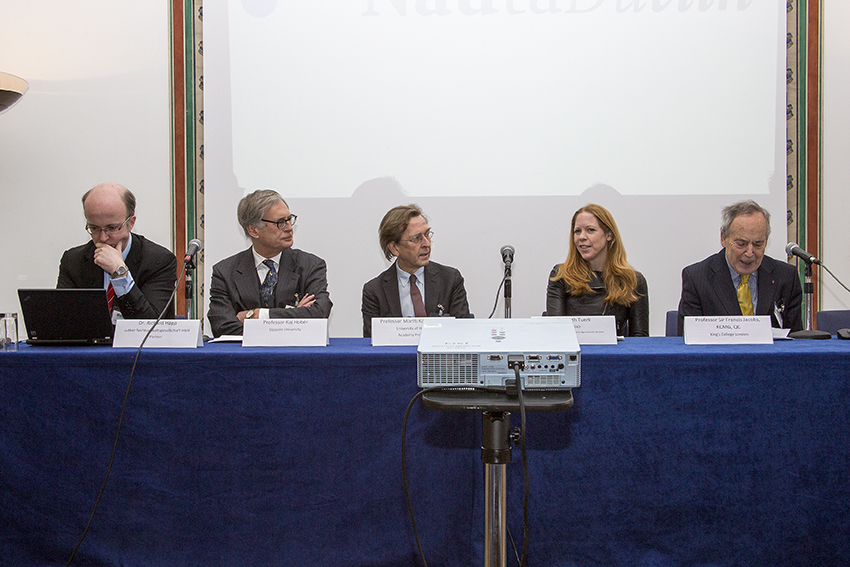
09:15-10:30 Panel 1: Pros and Cons of the existing ISDS system
– Moderator: Sir Francis Jacobs, KCMG, QC, Professor of Law at King’s College London; Advisory Board member of EFILA
– Richard Happ, Partner at Luther; Executive Board member of EFILA
– Kaj Hobér, Professor of International Investment and Trade Law at Uppsala University
– Martti Koskenniemi, Academy Professor at the University of Helsinki and Director of the Erik Castrén Institute of International Law and Human Rights
– Elisabeth Tuerk, Chief of the UNCTAD’s Section on International Investment Agreements (IIA) in UNCTAD’s Division on Investment and Enterprise
10:30-11:45 Panel 2: Intra-EU issues
– Moderator: August Reinisch, Professor at the University of Vienna
– Matteo Barra, Expert on Investment at Energy Charter Secretariat
– Frank ter Borg, Manager Public Affairs at Achmea; Advisory Board member of EFILA
– Emmanuelle Cabrol, Partner at Herbert Smith Freehills
– Stephen Jagusch, Partner at Quinn Emanuel Urquhart & Sullivan; Executive Board member of EFILA
– Stefaan De Rynck, Head of Unit, Free Movement of Capital and Enforcement of EU law at the DG Financial Services, Financial Stability, and Capital Markets Union, European Com-mission
11:45-12:15 Tea/coffee break
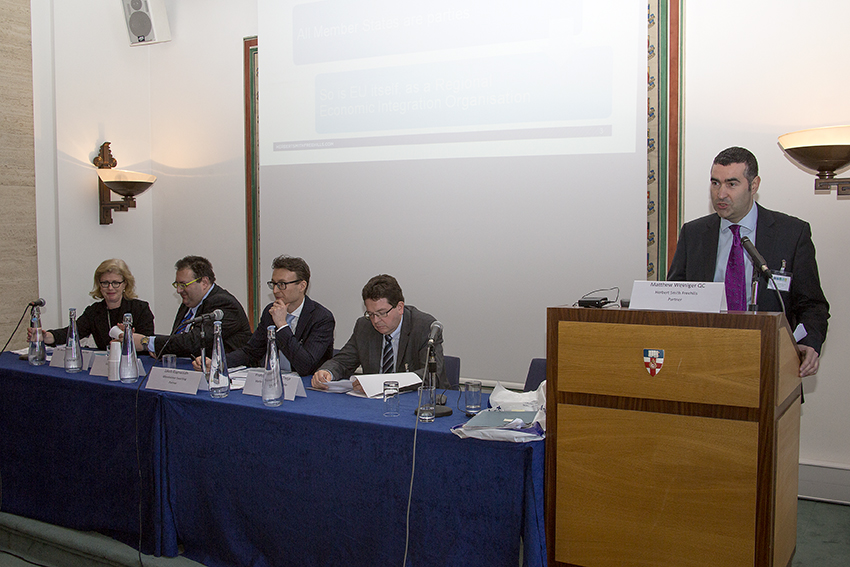
12:15-13:30 Panel 3: Extra-EU issues
– Moderator: Jakob Ragnwaldh, Partner at Mannheimer Swartling; Vice-Chairman of EFILA
– Jacomijn van Haersolte-van Hof, Director General of the LCIA
– Davide Rovetta, Of Counsel at Grayston & Company Law Firm; Chairman of the Advi-sory Board of EFILA
– Christian Tietje, Professor at the Faculty of Law, Economics and Business at the Martin Lu-ther University Halle-Wittenberg, Germany
– Matthew Weiniger QC, Partner at Herbert Smith Freehills; Executive Board member of EFI-LA
13:30-14:30 Lunch
14:30-15:45 Panel 4: Future treaty making
– Moderator: Professor Loukas Mistelis, Clive M Schmitthoff Professor of Transnational Commercial Law and Arbitration at the Queen Mary University of London; Advisory Board member of EFILA
– Sir Frank Berman KCMG QC, Barrister at Essex Court Chambers; former Legal Adviser to the Foreign & Commonwealth Office
– Markus Burianski, Partner at White & Case; Executive Board member of EFILA
– Christofer Fjellner, Member of the Committee on International Trade (INTA) of the European Parliament
– Annette Magnusson, Secretary General of the SCC
15:45-16:15 Tea/coffee break
16:15-17:30 Panel 5: Future Investment Policy Making and Its Expected Effects
– Moderator: Gerard Meijer, Partner and Head of Arbitration team at NautaDutilh; Ex-ecutive Board member of EFILA
– Karel Daele, International Arbitration Partner at Mishcon de Reya
– Lukasz Gorywoda, Assistant Legal Counsel at the Permanent Court of Arbitration; General Manager at EFILA
– Elizabeth Snodgrass, Counsel at Freshfields Bruckhaus Deringer LLP
– Erica Stein, Special Counsel at Dechert LLP
17:30-17:45 Closing remarks
– Professor Hans van Houtte, President of the Iran-United States Claims Tribunal; Advisory Board member of EFILA
I. Introduction
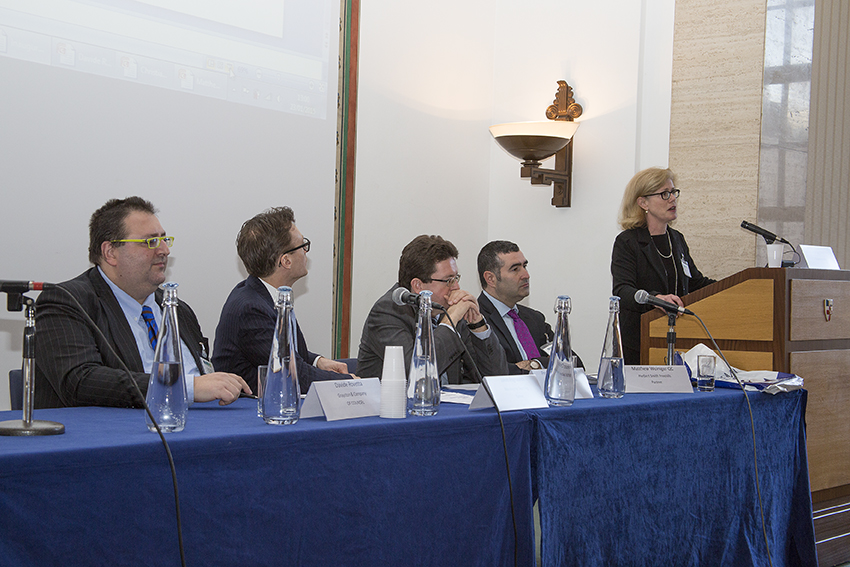
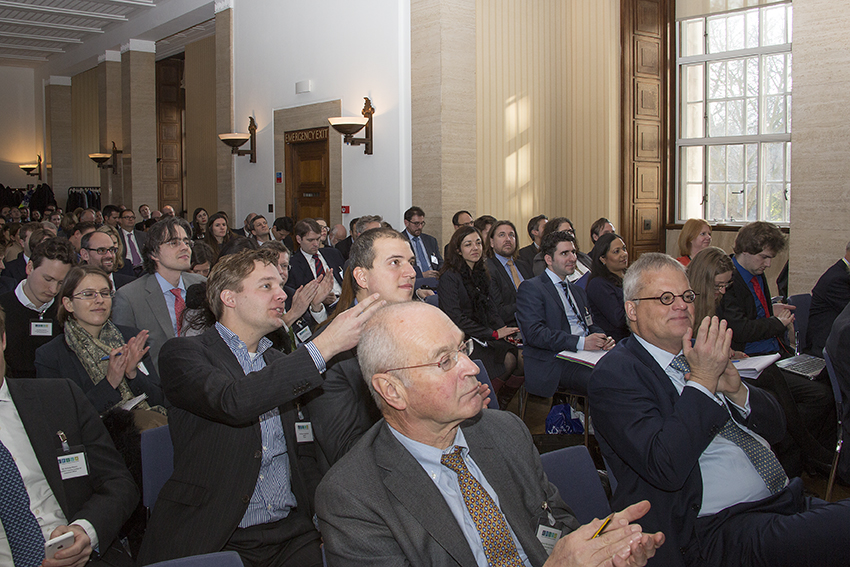
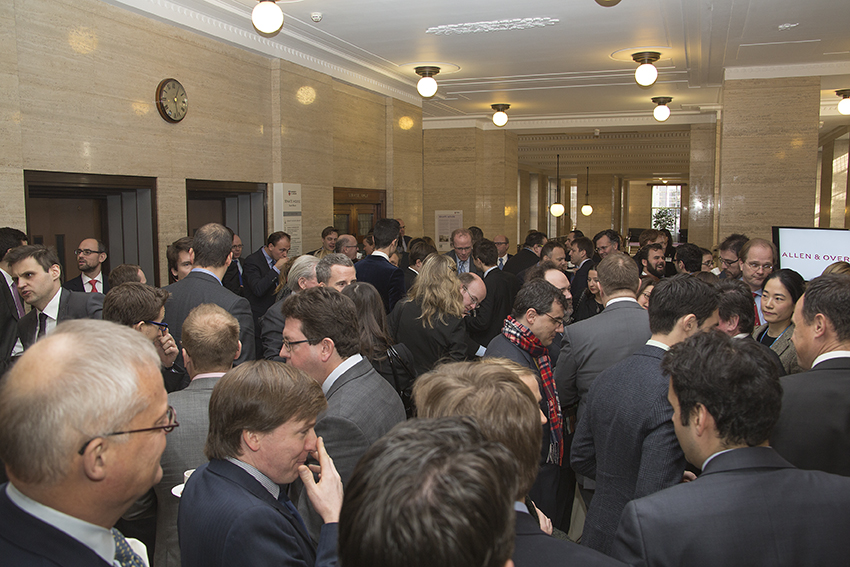
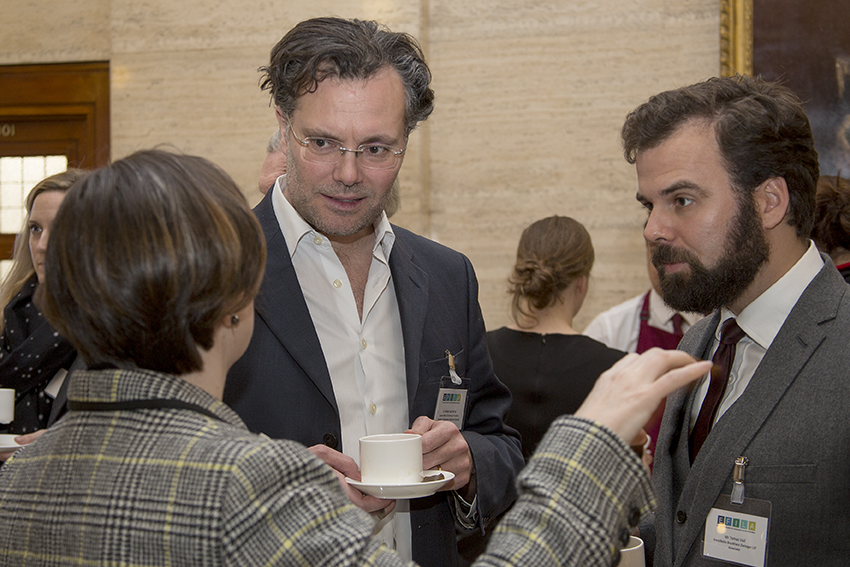
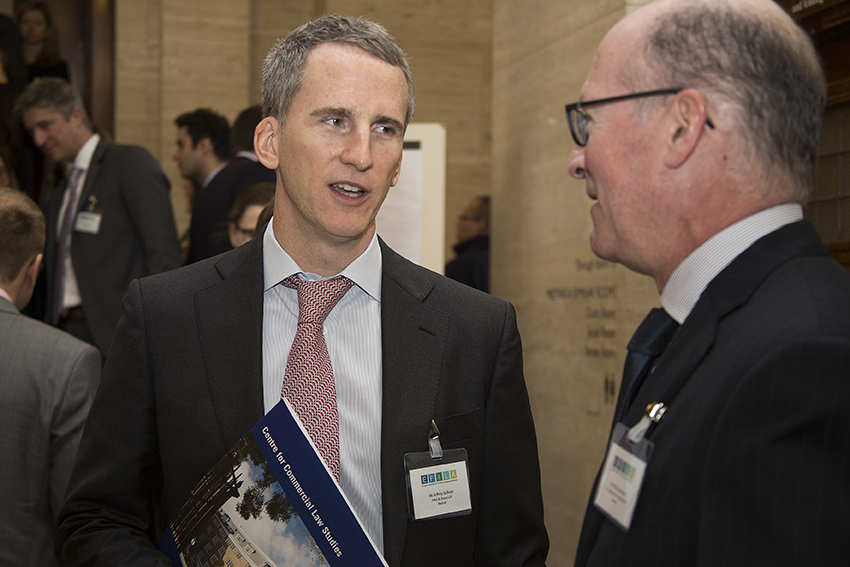
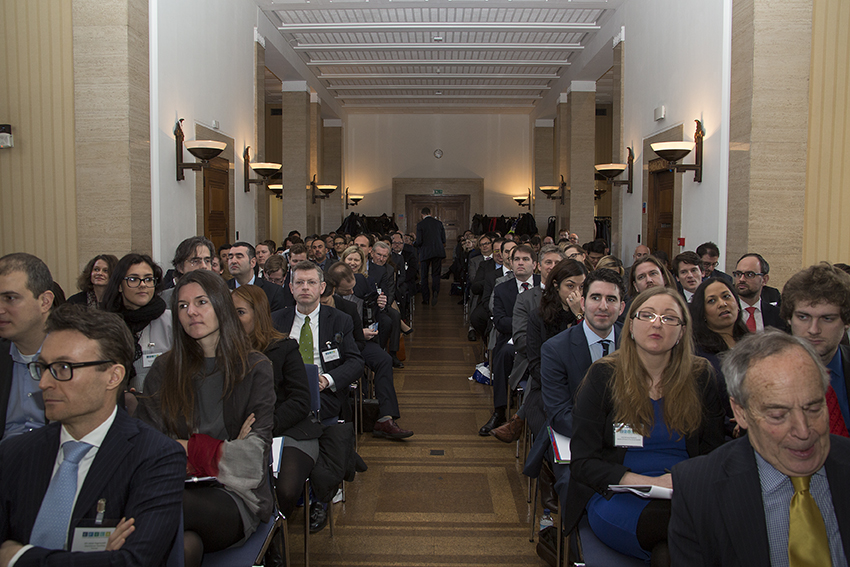
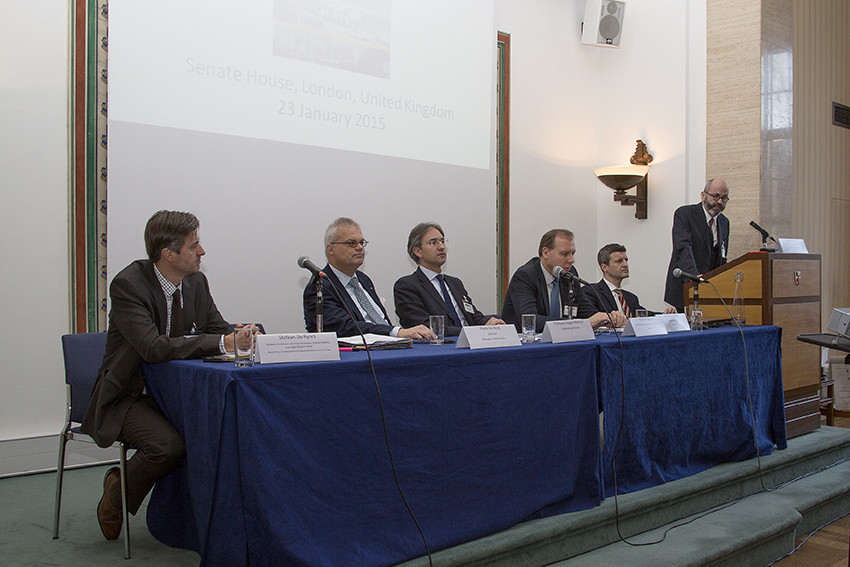
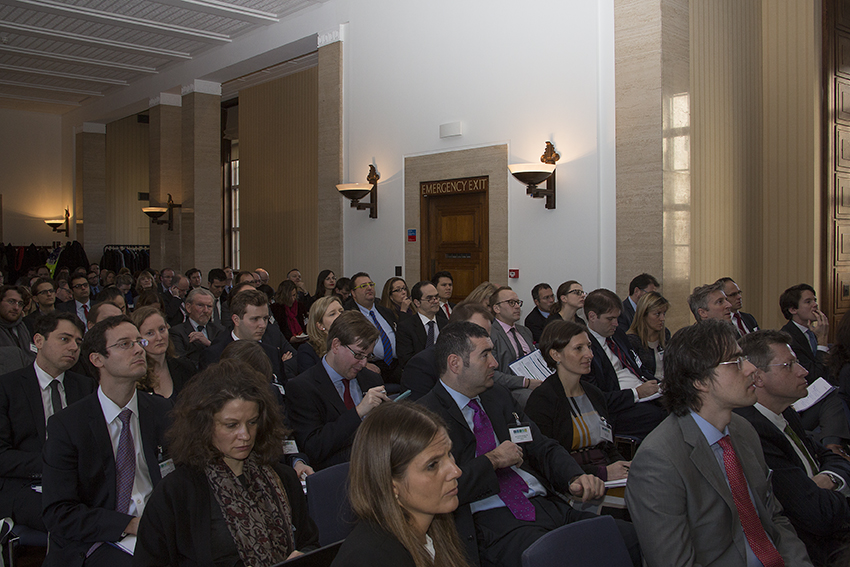
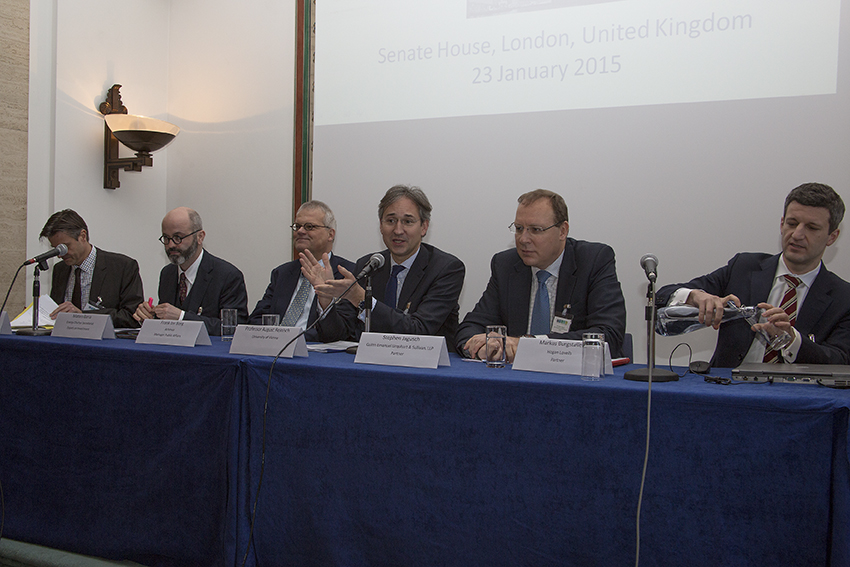
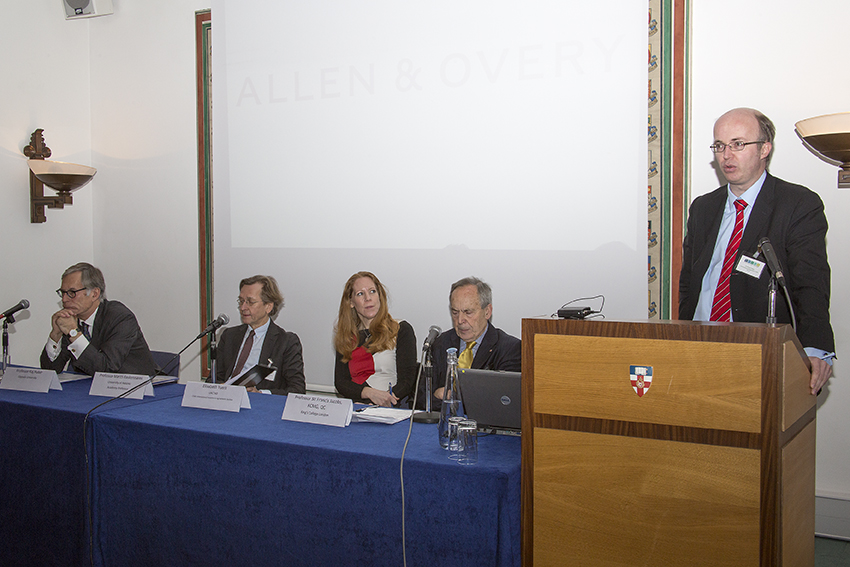
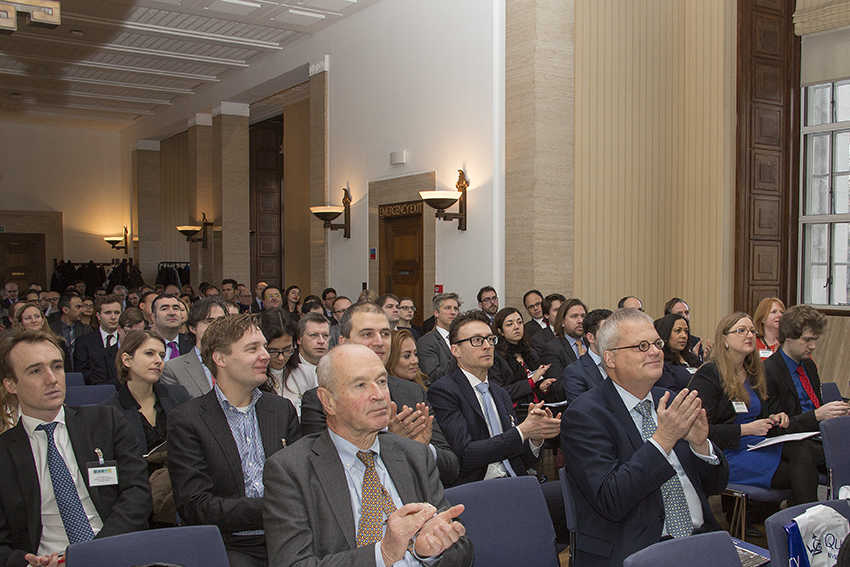
The European Federation for Investment Law and Arbitration (EFILA) marked the commencement of its activities on Friday 23 January 2015 with the Inaugural Conference entitled “EU law and investment treaty law: convergence, conflict, or conversation?” at Senate House of the University of London. An impressive array of stakeholders attended, from backgrounds as diverse as the European Commission, the European Parliament and officials from European governments, as well as senior figures from arbitration institutions and trade associations, academia and private practice. A rich and stimulating debate ensued on recent EU investment policy and the challenges associated with the use of Investor State Dispute Resolution (ISDS), a highly topical issue given the controversy over its proposed inclusion in the Transatlantic Trade and Investment Partnership (TTIP), among other international agreements currently under negotiation.
A vast array of issues was canvassed over the course of discussions led by five panels, which explored how ISDS mechanisms can co-exist with the EU legal framework.
II. Panel 1: Pros and Cons of the existing ISDS system
The first panel examined the existing ISDS system and its effectiveness. It was acknowledged that the introduction of bilateral investment treaties (BITs) has revolutionised dispute resolution by giving investors recourse against the state. However, the panel contrasted the growth in the number and substance of BITs in recent times with the burgeoning disengagement from the investment arbitration system visible in certain jurisdictions. Speakers tackled oft-cited criticisms of ISDS and BITs, including the notions that BITs limit state sovereignty, that ISDS favours the investor, and that decisions of the democratically elected should not be challenged by unelected international tribunals. Options for improvement were considered, such as promoting alternative dispute resolution mechanisms; amending treaty provisions, and establishing an international investment court. The suggestion of an appeals facility was met with concern about the legitimacy of having a ‘superior’ tribunal in a system with no formal doctrine of precedent, and the role of the tribunal in deciding individual cases rather than ruling on the state of the law as such. The impact of such a facility on settlement was also discussed.
Available PowerPoint presentations:
1. Elisabeth Tuerk: Investor-State Dispute Settlement: Trends, Challenges and Way Forward
III. Panel 2: Intra-EU issues
The next panel engaged in heated debate on the interplay between public international law and EU law in the context of investment arbitration. Those who consider EU law to be another form of international law maintained it should be interpreted on an equal plane with investment treaties. For these speakers, conflicts between international law and EU law should be resolved using the usual tools of treaty interpretation and conflict of laws rules. Strong opinions were voiced on the European Commission’s perceived intervention in arbitration proceedings and awards, to the detriment of investors. Others opined that EU law reigns supreme within the EU above all forms of international law, including BITs, the Energy Charter and the ICSID Convention. They argued that, in order to respect the single legal order which the EU has attempted to create, and to ensure that all member state investors receive equal rights and protections, incompatibility between BITs and EU law must be interpreted to fit within the context of EU law. While arbitral tribunals have so far accepted jurisdiction in the intra-EU context, it was noted that it remains to be seen whether the opinion of the CJEU will differ.
Available PowerPoint presentations:
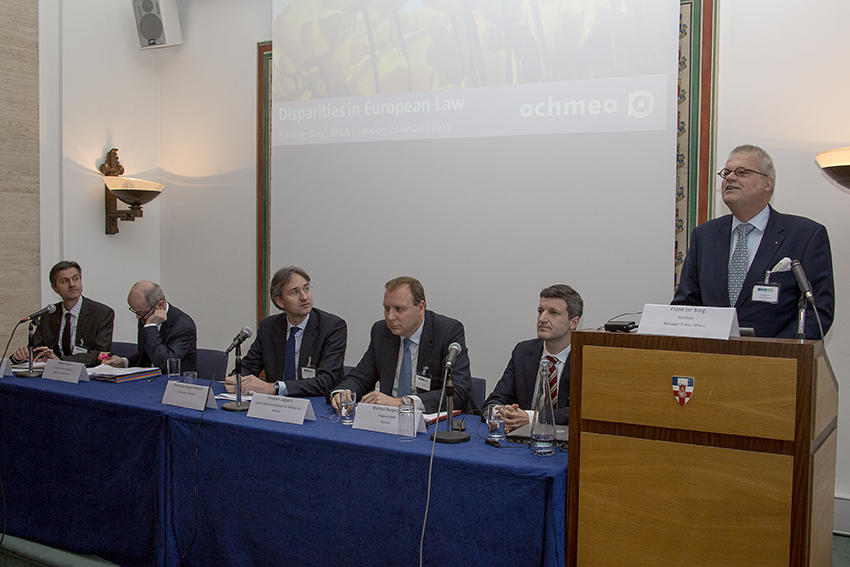
1. Frank ter Borg: Disparities in European Law
2. Markus Burgstaller: Intra-EU Investment Treaties and EU Law
3. Stefaan De Rynck, EU Commission: Recent economic developments in investment and capital flows
IV. Panel 3: Extra-EU issues
The succeeding panel considered extra-EU issues and the position of BITs between Member States and third party countries. The panel differentiated between treaties entered into prior to the Lisbon Treaty, under which the investor may theoretically sue either the EU or the Member State, and those concluded post-Lisbon, for which a framework exists for allocating responsibility. Speakers examined practical considerations in bringing an action against the EU, including the importance of which court has control, whether the court should be within or outside of the EU, and the use of institutional rules to minimise risk. While the CJEU has established that EU law is supreme, the panel acknowledged that the CJEU will usually try to apply EU law in light of international law. However, speakers recognised that, since there is no judicial review available for ICSID awards, a tribunal could theoretically take a position which, upon enforcement, would run contrary to EU law. It was therefore suggested that parties to an ICSID dispute refer to the CJEU for a preliminary reference, to establish any clash with EU law prior to the tribunal’s decision.
Available PowerPoint presentations:
1. Davide Rovetta: If you play with fire, you get burned: EU law vs. investment arbitration law
2. Prof. Dr. Christian Tietje: Enforcement of ICSID Awards and Conflicts with EU Law
V. Panel 4: Future treaty making
The penultimate panel looked at the future of treaty-making and emphasised the organic and evolving nature of international law, which has already achieved significant developments in investor-state dispute resolution. The clear message from the panel was that states have regained control from the tribunal. The speakers touched on the unique legal framework of investment treaties, which permits direct action by third parties, and the pros and cons of umbrella clauses. It was also suggested that treaties should ensure ISDS is not used by investors to seek compensation for mere contractual breaches. The panel noted that policy makers should consider any potential repercussions beyond the signatory states and the EU when drafting treaties. Lastly, the panel encouraged the active involvement of lawyers and academics in the negotiations on the proposed inclusion of ISDS in TTIP, highlighting that the vast majority of participants in the recent consultation were businesses.
Available PowerPoint presentations:
1. Markus Burianski: Umbrella Clause – A Desirable Instrument ?
2. Speech by Annette Magnusson: Future Treaty Making
VI. Panel 5: Future Investment Policy Making and Its Expected Effects
The final panel considered the future of investment policy and its effect on foreign direct investment and dispute resolution. Speakers focused on the EU’s goal to increase investment protection, and also perceived attempts to limit the application of ISDS. Both UNCTAD and UNCITRAL were felt to have a continuing practical influence on states in their policy making. Some methods to improve the application of investment treaty standards were considered, including making the interpretation of treaties binding to allow for greater predictability, more detailed drafting of the substantive content of treaties to provide maximum guidance on their application, and an appellate system. Speakers also encouraged the enhancement of environmental protections through treaty drafting. It was warned that exclusion of ISDS in TTIP may lead to questions of discrimination, should states try to negotiate its inclusion in future BITs with other states. For increased protection, investors were advised to address any rights limited by treaties through the drafting of the arbitration clause itself.
VII. Conclusions
Overall, the conference demonstrated that, in general, participants’ views on the relationship between EU law and investment treaty law depended on from which of the two main underlying perspectives they approached the topic, i.e. that EU law is supreme, or merely forms part of international law. While the ‘Solange’ approach was suggested as a practical solution to the tension between the two, the CJEU’s Opinion in Micula and others v Romania (ICSID Case No. ARB/05/20) casts doubt on its viability. Several questions arose from the conference, including whether it is possible to establish a functioning co-existence between EU law and international investment law in Europe; the role, if any, that arbitral tribunals should have in constitutional, democratic legal systems, and how future BITs and ISDS can positively contribute to promote sustainable investments and the Rule of Law, and protect fundamental rights.
The depth and breadth of dialogue generated at the conference, both by the panel members and the attendees, provided an unprecedented opportunity for increased appreciation of the complex debate surrounding investor-state arbitration and its place within the EU legal framework. It is hoped that the deepened understanding gleaned from such discussions will assist in promoting an informed and balanced approach to investor-state arbitration, as well as influencing EU policy to promote improved investment treaty legislation, policy and mechanisms for the resolution of related disputes.
Our Partners















Annual Conference 2025
10th Annual EFILA Conference 29 April 2025 Herbert Smith Freehills in London The next 10 years of Investment Treaty Arbitration download the full programme and bios of speakers Annual EFILA Conference 2025 with bios 8-42025a Watch the recording of the keynote here Programme: 8:30 – 9:15 Registration and buffet breakfast sponsored by Gide 9:15…
Annual Conference 2024
9th EFILA Annual Conference on 25 April 2024 at Clifford Chance in Frankfurt Download the Conference booklet with all bios: 9th EFILA Annual Conference prorgamme 24-4-2024 full programme with bios Download PPT presentations and article of the speakers: The topic of the conference was: New Frontiers in International Investment Arbitration PROGRAMME 08:30-09:00 Registration and buffet…
Annual Conference 2023
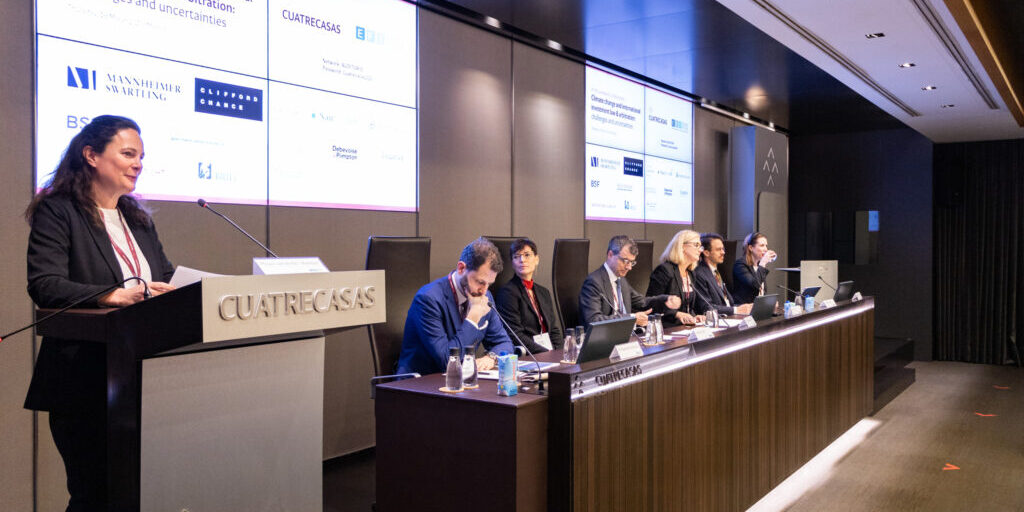
8th EFILA Annual Conference 2023 16 March 2023 hosted by Cuatrecasas in Madrid Climate change and international investment law & arbitration: challenges and uncertainties Download the Conference booklet with all bios of the Speakers here WATCH THE KEYNOTE BY WENDY MILES, KC here some photo impressions of the EFILA Annual Conference 2023 Programme 08:30-09:00…

Annual Conference 2022
7th EFILA Annual Conference in Amsterdam, 9 JUNE 2022 Is the EU still an attractive investment destination? The keynote was delivered by Prof. Dr. iur. et lic.rer.pol Anne van Aaken (Alexander von Humboldt Professor, Chair for Law and Economics, Legal Theory, Public International Law and European Law, Hamburg University) Keynote Speech: “Europe as an investment…

Annual Conference 2021
14 and 15 January 2021 6th EFILA ANNUAL CONFERENCE The renewed role of States in arbitration Download the slides of the Keynote of Gary Born delivered on 14 January 2021: Gary Born MIC Speech Final Version 1 Watch Day 1 of the EFILA conference 2021, encompassing Panel 1 and the Keynote Speech of Gary Born…
Annual Conference 2020
Register now! 5th EFILA Annual Conference 30 January 2020 in London! Investment Protection in the EU: Alternatives to intra-EU BITs Keynote Speaker: Meg Kinnear, Secretary General of ICSID Watch the keynote speech by Meg Kennear (SG of ICSID) Conference booklet with bios of speakers: programme EFILA Annual Conference 2020 15-1-2020 FINAL PROGRAMME 08:30-09:00 Registration and buffet…

Annual Conference 2019
4th EFILA Annual Conference on 31 Janaury 2019 in London The EU and the future of international investment law and arbitration Click here to watch the keynote speech of Colin Brown (DG Trade) (28 min). Click below for the programme: EFILA Annual Conference 2019 – Program – 16-1-2019a Some impressions of the EFILA Annual Conference…
Annual Conference 2018
3rd EFILA ANNUAL CONFERENCE 2018 PARALLEL STATES’ OBLIGATIONS IN INVESTMENT ARBITRATION 5 FEBRUARY 2018 Chancellor’s Hall, Senate House, University of London Watch the Keynote Speech by the honorable Charles N. Brower (45 min). Read the summary Report of the conference. EFILA Annual Conference booklet 2018 PROGRAMME 08:30-09:00 Registration tea and coffee09:00-09:15 Welcome Address by…

Annual Conference 2016
The EFILA Annual Conference 2016 entitled “Investment arbitration 2.0?” took place on 5 February 2016 at La Maison du Barreau in Paris. The Conference brought together about 100 world-class dispute resolution practitioners and prominent arbitration experts and discussed the challenges and opportunities of investment arbitration, including the new features of investment protection chapters included in…
Our Corporate Members